
The format
A stage race, gravel to the core
Days you race, nights you recover, and a general classification that rewards the whole week. The format that made the Tour de France, on the highest gravel in the country.
How it works
Three parts
Point-to-point days
Each stage links a high pass to a mountain town or the ranch. Chip-timed, self-supported, fully swept. Several days across a long weekend to a week, depending on the edition.
General classification
Your stage times add up. Lowest cumulative time wins the overall — the yellow-jersey idea, on gravel. Consistency and climbing both pay.
King & Queen of the Mountains
Timed segments up the marquee passes crown the best climbers, scored separately from the overall. The passes are where the race turns.
Categories
Every rider has a race
An elite general-classification race up front, timed touring waves behind it, with cutoffs built around the altitude for the back of the field.
| Category | Who it's for | Scored by |
|---|---|---|
| Elite / Open GC | Racers chasing the overall | Cumulative time, all stages; KOM/QOM segments |
| Age-group GC | Competitive amateurs by category | Cumulative time within category |
| Touring waves | Riders who want the experience and the finish | Timed, generous cutoffs; completion recognized |
| E-gravel | E-bike riders | Separate classification |
You don't have to win to belong. You have to finish the high country, and at 12,000 feet that is hard enough.
Raced hard, run right
Self-supported, fully swept
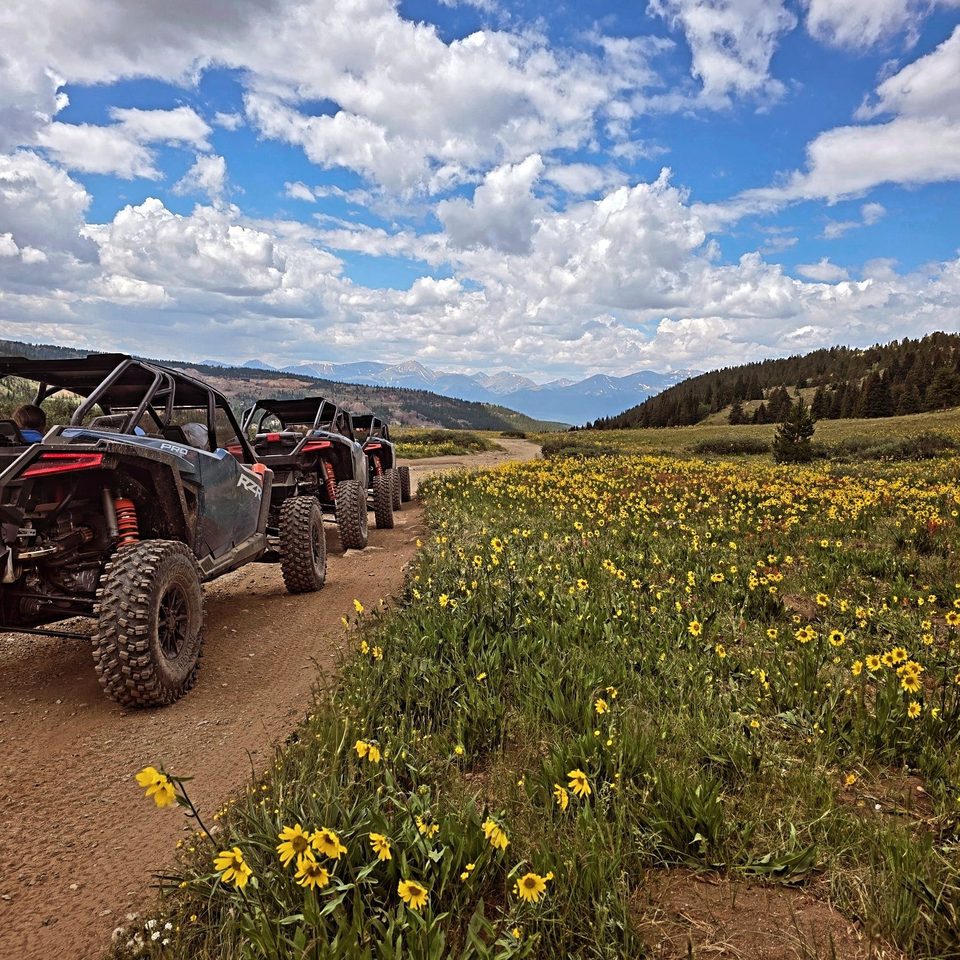
Riders carry their own day, but a UTV support fleet runs every stage with water, tools, mechanical help and a lift for anyone the altitude beats. A sweep vehicle follows the last rider on every stage. Nobody is left on a pass.
Between stages, the field basecamps at the ranch and in Leadville, with mechanics and medical on site. The recovery is part of the performance.

Stage count and dates are still open
The inaugural edition is being shaped now. Founding partners and early riders help set it.